You Won’t Believe These Hidden Protected Places in Bali
Think you’ve seen all of Bali? Think again. Beyond the crowded temples and tourist-heavy beaches lie untouched protected areas few travelers ever witness. I ventured deep into Bali’s best-kept natural sanctuaries—from misty highland forests to coastal reserves teeming with life. What I found was pure magic: silence broken only by birdsong, rivers running crystal clear, and landscapes shaped by tradition and conservation. This is Bali’s wild soul, preserved in quiet strength.
The Secret Side of Bali: More Than Just Beaches and Temples
Bali is often celebrated for its golden sunsets over Uluwatu, the spiritual energy of Ubud’s rice terraces, and the vibrant offerings lining every village path. These wonders are real, and they draw millions each year. Yet, beneath the surface of postcard-perfect imagery lies a quieter, more profound Bali—one that thrives in protected forests, remote highlands, and guarded coastal zones. These are not merely scenic backdrops; they are living ecosystems sustained by centuries-old Balinese philosophy and modern conservation efforts.
At the heart of this balance is Tri Hita Karana, a foundational Balinese belief that emphasizes harmony among three realms: humans, nature, and the divine. This worldview has long guided land use, farming practices, and community stewardship. Sacred forests are left undisturbed not because of legal mandates alone, but because they are believed to house ancestral spirits and deities. Rivers are kept clean not only for agriculture but as part of ritual purity. In this way, conservation in Bali is not a modern import—it is woven into the island’s spiritual fabric.
Today, these values continue to protect some of Bali’s most ecologically significant areas. While popular spots like Seminyak and Kuta pulse with energy, the island’s protected zones remain calm, resilient, and deeply rooted in tradition. They offer travelers not just escape, but transformation—a chance to witness nature not as a commodity, but as a sacred trust. For those willing to journey beyond the usual paths, Bali reveals itself not as a destination, but as a living legacy.
West Bali National Park: Where Wilderness Still Rules
Nestled on the island’s remote northwestern tip, West Bali National Park spans over 190 square kilometers of pristine forests, mangroves, coral reefs, and savanna-like clearings. Unlike the bustling south, this region sees only a fraction of Bali’s annual visitors, making it one of the last strongholds of true wilderness on the island. The park’s isolation is both its greatest strength and its greatest challenge—fewer people mean less disturbance, but also less attention and funding for preservation.
This park is home to some of Bali’s most endangered wildlife, most notably the Bali myna, a strikingly white bird with blue eye markings and a crest of feathers. With fewer than 50 individuals estimated to remain in the wild, the Bali myna is one of the rarest birds on Earth. Conservation breeding programs operate within the park, and sightings—though rare—are possible during early morning treks through the Menjangan Peninsula. The park also supports wild boar, silver-leaf monkeys, and a variety of reptiles and migratory birds, all thriving in an ecosystem largely untouched by mass tourism.
Visitors can explore the park through guided jungle walks, snorkeling in secluded bays like Teluk Terima, and kayaking through mangrove channels teeming with juvenile fish and crustaceans. Accommodation options are intentionally limited—simple ranger lodges and eco-cottages provide basic but comfortable stays, emphasizing immersion over luxury. There are no souvenir shops, no loud music, and no crowds. Instead, the rhythm of life here is set by tides, bird calls, and the soft rustle of leaves in the wind.
One of the most memorable experiences is hiking to Pulau Kera, or Monkey Island, a small islet within the park where long-tailed macaques roam freely. Unlike their urban counterparts, these monkeys live in a natural setting, foraging and socializing without reliance on human handouts. The contrast is striking—and a reminder of how quickly wildlife adapts, for better or worse, to human presence.
The Sacred Forests of North Bali: Hidden Groves with Spiritual Power
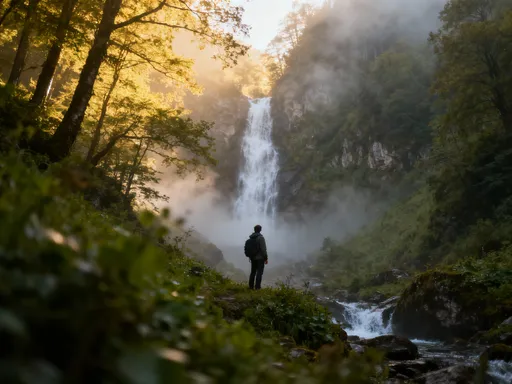
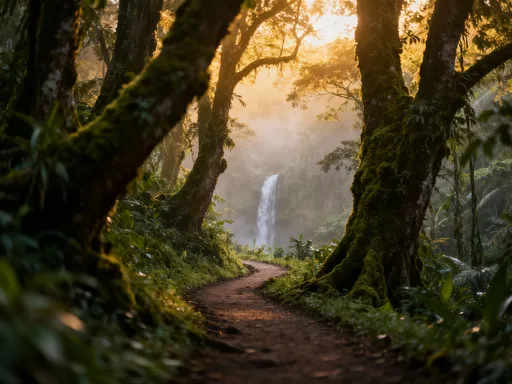
As the island rises into the highlands of northern Bali, the air cools and the landscape transforms. Lush valleys give way to dense forests shrouded in mist, where ancient banyan and jambu trees stretch skyward, their roots twisting like serpents across moss-covered stones. These forests—particularly around villages like Munduk, Sembungan, and Banyuscha—are not just ecologically vital; they are spiritually protected. Locals refer to them as hutan adat, or customary forests, governed by traditional laws passed down through generations.
In these groves, conservation is not enforced by rangers but by belief. Villagers perform regular offerings at forest entrances, asking permission from the spirits before entering. Some areas are strictly off-limits, reserved only for ceremonial use or left entirely undisturbed. This spiritual guardianship has preserved biodiversity in ways that formal legislation alone could not. Hidden within these forests are waterfalls like Munduk’s twin cascades and Banyuscha’s secluded plunge pools—places so pristine they seem untouched by time.
Walking through these forests is an exercise in mindfulness. The canopy filters sunlight into soft green beams, while the sound of rushing water echoes in the distance. Occasionally, a local guardian—often an elder in traditional attire—can be seen placing a small offering of flowers and rice at the base of an ancient tree. These rituals are not performances for tourists; they are daily acts of reverence, reinforcing the bond between people and land.
Tourism here is growing, but carefully managed. Small homestays run by local families offer authentic stays, often including meals made from homegrown ingredients and guided walks led by community members. These experiences are not about spectacle, but about connection. Travelers learn not just about the forest, but about the people who have protected it for centuries. In doing so, they become temporary stewards, carrying forward a legacy of respect.
Pura Luhur Batukaru and Its Surrounding Reserve: Nature and Devotion Intertwined
Perched on the southwestern slopes of Mount Batukaru, Bali’s second-highest peak, Pura Luhur Batukaru is one of the island’s most sacred temples. Unlike the more accessible Pura Tanah Lot or Uluwatu, Batukaru remains off the standard tourist circuit, reachable only by narrow roads that wind through coffee plantations and dense jungle. The temple sits within a protected forest reserve, where towering trees draped in moss and vines create a cathedral-like atmosphere, and the air carries the scent of damp earth and incense.
The temple itself is dedicated to the deified form of Mount Batukaru, believed to be a dwelling place of ancestral spirits and deities. Daily offerings are made at stone shrines along the path, and prayer flags flutter in the breeze, their mantras carried on the wind. The journey to the temple is as significant as the destination—visitors walk along stone steps flanked by ferns and orchids, passing through zones where silence is expected, not requested.
What makes this area remarkable is how religious devotion has become a form of environmental protection. The forest surrounding the temple is considered sacred ground, and cutting trees or disturbing wildlife is culturally forbidden. As a result, the ecosystem remains intact, supporting rare bird species, amphibians, and medicinal plants used in traditional Balinese healing. The water that flows from these highlands feeds irrigation systems across the island, underscoring the real-world impact of spiritual conservation.
Despite its beauty, Batukaru receives only a modest number of visitors each year. Many are Balinese pilgrims, not foreign tourists. Those who do come are often seeking quiet reflection rather than photo opportunities. There are no loudspeakers, no crowded courtyards—only the sound of chanting, the rustle of leaves, and the occasional call of a distant bird. In this space, nature and devotion are not separate; they are one and the same.
Sustainable Access: How to Visit Without Harming
As interest in Bali’s hidden natural treasures grows, so does the risk of over-tourism. The very qualities that make these places special—seclusion, purity, authenticity—are also their most fragile. The key to preserving them lies not in restricting access entirely, but in ensuring that access is responsible, informed, and community-centered.
One of the most effective ways to travel sustainably in these areas is by hiring local guides. These individuals are not just navigators; they are educators, storytellers, and cultural ambassadors. They know which trails minimize environmental impact, where sacred zones begin, and how to interpret signs of wildlife without disturbing it. Their presence ensures that tourism benefits the people who live in and protect these lands, rather than bypassing them entirely.
Sticking to marked trails is another simple but powerful practice. Off-trail exploration may seem harmless, but it can lead to soil erosion, trampling of native plants, and disruption of animal habitats. In sensitive areas like cloud forests or riverbanks, even a single footprint can have lasting consequences. Similarly, avoiding single-use plastics is essential. Many of these regions lack formal waste management systems, meaning that a discarded bottle can remain in the environment for decades.
Respecting ceremonial zones is equally important. In places like Pura Luhur Batukaru or the sacred groves of North Bali, visitors should dress modestly, speak quietly, and refrain from touching offerings or ritual objects. These are not tourist attractions; they are active places of worship. When in doubt, observe and follow the lead of locals.
Supporting community-led ecotourism initiatives is one of the most impactful choices a traveler can make. From homestays in Munduk to guided birdwatching tours in West Bali, these programs ensure that economic benefits stay within the community. They also foster pride in local heritage, encouraging younger generations to continue the work of conservation. By choosing such experiences, travelers do more than enjoy a unique journey—they help sustain it for the future.
Why These Places Are at Risk—And What’s Being Done
Despite their resilience, Bali’s protected areas face growing threats. Illegal logging, though reduced, still occurs in remote zones where enforcement is difficult. Unregulated tourism development—small hotels, roads, and parking areas—has begun to encroach on forest boundaries, fragmenting habitats and increasing pollution. Plastic waste, carried by rivers from urban centers, now reaches even the most secluded waterfalls and coastal reserves.
Water scarcity is another pressing issue. As demand from agriculture and tourism rises, natural springs and underground aquifers are being overdrawn. In some highland villages, streams that once flowed year-round now dry up during the dry season. This not only affects ecosystems but also challenges the traditional subak irrigation system, a UNESCO-recognized practice that depends on balanced water distribution.
Yet, there is reason for hope. Reforestation projects, often led by youth groups and NGOs, are restoring degraded lands with native tree species. In West Bali, community patrols monitor for illegal activity and assist in wildlife monitoring. Schools now include environmental education in their curricula, teaching children about the importance of protecting their natural heritage.
Government-community partnerships have also strengthened in recent years. The Bali Provincial Government, in collaboration with local villages, has expanded protected zones and supported eco-certification for tourism businesses. In some areas, traditional awig-awig (village bylaws) have been formally recognized, giving customary forest guardians legal authority to manage their lands.
One notable example is the restoration of the Ayung River watershed, where upstream communities have implemented organic farming practices to reduce chemical runoff. Downstream, hotels and resorts have committed to water conservation measures. This kind of collaboration—linking ecological health with economic well-being—shows that conservation is not a burden, but a shared responsibility.
Rediscovering Bali Through Its Protected Lands: A Traveler’s Responsibility
Visiting Bali’s hidden protected areas changes the way one sees the island. It shifts the focus from relaxation to reverence, from consumption to connection. These places are not just beautiful—they are alive with meaning, shaped by centuries of cultural wisdom and ecological balance. To walk through them is to step into a different rhythm, one that honors silence, simplicity, and sustainability.
For the modern traveler, especially women between 30 and 55 who often seek meaningful, enriching experiences, these journeys offer something rare: depth. They provide space to reflect, to breathe, to remember that travel is not just about where we go, but how we move through the world. In a time when many destinations feel overexposed or commercialized, Bali’s protected lands stand as a reminder that wonder still exists—in the rustle of leaves, the clarity of a mountain stream, the quiet dignity of a village ritual.
But with access comes responsibility. Every footstep, every choice, carries weight. To take only photographs, leave only footprints, and respect local customs is not just good practice—it is essential. These places do not exist for our entertainment; they exist because generations have chosen to protect them. Our role is not to conquer or capture, but to witness and honor.
The true spirit of Bali is not in its resorts or Instagrammable sunsets. It is in the mist that clings to the highland forests, in the songs of birds few have heard, in the quiet devotion of those who guard the land. To visit these places is a privilege—one that asks us to be better travelers, better stewards, and better guests. Let us carry that spirit forward, not as tourists, but as guardians of a fragile, beautiful world.