You Won’t Believe These Lagos Landmarks Until You See Them
Lagos isn’t just Nigeria’s bustling heartbeat—it’s a city where concrete dreams rise tall and bold. I recently wandered through its dynamic streets, eyes locked on the skyline’s stars: iconic buildings that tell stories of ambition, culture, and resilience. From colonial echoes to futuristic towers, these landmarks aren’t just structures—they’re statements. What makes them worth your time? Let’s dive into the architecture that defines Lagos, one breathtaking facade at a time.
The Pulse of Lagos: Why Architecture Tells the Real Story
Lagos has transformed from a quiet coastal settlement into a megacity of over 15 million people, a vibrant urban center that pulses with energy, innovation, and relentless movement. Amid the honking of danfos, the chatter of street vendors, and the rhythm of Afrobeat drifting from open windows, the city’s architecture stands as a silent yet powerful narrator of its journey. Each landmark, whether weathered by decades or gleaming with modern glass, reflects a chapter in Lagos’ evolving identity. More than museums or markets, these buildings offer insight into the soul of the city—its past struggles, present ambitions, and future aspirations.
The built environment of Lagos is not merely functional; it is symbolic. Colonial-era structures speak of a time when the city was a strategic port under British administration, while mid-century modernist buildings reflect the optimism of a newly independent Nigeria. Today’s sleek towers and ambitious urban projects, like Eko Atlantic, project confidence and a forward-looking vision. These architectural layers create a rich tapestry that tells the story of a city constantly reinventing itself. For visitors, understanding Lagos through its landmarks means engaging with history, culture, and civic pride in a tangible, visual way.
What sets Lagos apart from other global cities is the coexistence of old and new, formal and informal, grand and humble. A centuries-old church stands just blocks away from a futuristic corporate tower. Government buildings with classical colonnades neighbor bustling markets where traders sell everything from plantains to phone chargers. This architectural duality mirrors the resilience and adaptability of Lagosians themselves. To walk through the city is to witness a living dialogue between tradition and progress, between memory and momentum. Architecture, in this sense, becomes more than aesthetics—it becomes a form of storytelling accessible to all.
Tinubu Square: Where History Stands Tall
Nestled in the heart of Lagos Island, Tinubu Square is more than a public space—it is a historical crossroads where the past and present converge. Named after Madam Efunroye Tinubu, a powerful 19th-century Yoruba merchant and political figure who resisted colonial rule, the square has long served as a focal point for civic life. Surrounded by government buildings with colonial-era facades, the site pulses with the weight of decisions made and protests held within its vicinity. Though modest in size, its symbolic significance is immense, marking the city’s transition from a traditional kingdom to a modern administrative center.
The architecture surrounding Tinubu Square reflects a blend of British colonial design and tropical adaptation. Buildings feature wide verandas, high ceilings, and shuttered windows—elements designed to combat the heat and humidity of the coastal climate. The facades, though weathered by salt air and time, retain a dignified presence. In the early morning light, the sun casts long shadows across the square, illuminating peeling paint and rusted railings that speak of endurance rather than decay. By midday, the area buzzes with civil servants, commuters, and local traders, turning the space into a living extension of the city’s rhythm.
Visitors to Tinubu Square are not just observing a monument—they are stepping into a continuum of public engagement. Political rallies, national celebrations, and everyday civic interactions unfold here, making it a true heart of Lagosian democracy. While it may not have the polished appearance of newer developments, its authenticity is precisely what makes it compelling. To stand in the square is to feel the pulse of a city that has witnessed change, resisted oppression, and continued to move forward. It is a place where history is not locked behind glass but lived in the footsteps of those who pass through each day.
The Cathedral Church of Christ: A Spire of Serenity
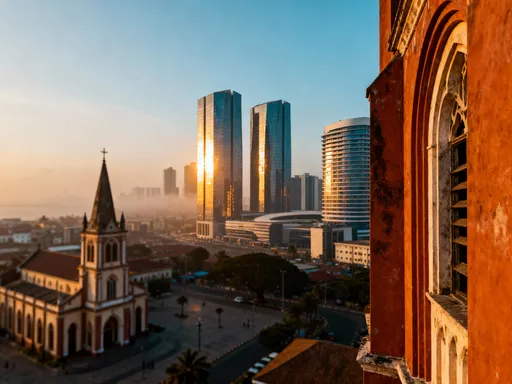
Rising above the bustling Marina district, the Cathedral Church of Christ is a sanctuary of calm in the midst of urban chaos. Built in 1929, this Anglican cathedral stands as one of the most architecturally striking religious buildings in Lagos. Its Gothic Revival style—complete with pointed arches, stained glass windows, and a tall, slender spire—contrasts sharply with the surrounding low-rise administrative buildings and busy streets. The cathedral’s presence is both spiritual and visual, offering a moment of stillness for worshippers and passersby alike. Even from a distance, its silhouette commands attention, a vertical invitation in a city defined by horizontal sprawl.
Stepping inside, the atmosphere shifts dramatically. The noise of traffic fades, replaced by the soft echo of footsteps on stone floors and the faint scent of polished wood. Sunlight filters through colorful stained glass, casting kaleidoscopic patterns on the pews. The interior is modest yet elegant, with wooden pews arranged in neat rows leading to a simple altar. On Sundays, the cathedral comes alive with music—hymns sung in Yoruba, English, and pidgin, blending tradition and contemporary worship. But even on quiet weekdays, the space holds a sacred stillness, a reminder of the enduring role of faith in Lagosian life.
Beyond its religious function, the Cathedral Church of Christ is an architectural landmark that anchors the Marina skyline. Its preservation over decades speaks to the city’s respect for its heritage, even as new towers rise around it. Unlike many colonial-era buildings that have been repurposed or neglected, the cathedral remains fully active, serving both spiritual and community needs. It hosts weddings, memorial services, and youth programs, reinforcing its role as a living institution. For visitors, it offers a rare opportunity to experience both historical architecture and genuine cultural continuity—a place where the past is not displayed but lived.
NEPA Building: Retro Futurism at Its Finest
Standing proudly on Marina, the former NEPA (National Electric Power Authority) building is a beloved icon of mid-century modernist architecture in Lagos. Constructed in the 1960s, during a period of national optimism following independence, the building exemplifies the era’s fascination with progress, technology, and clean geometric forms. Its façade is a grid of concrete and glass, with deep-set windows that create rhythmic patterns of light and shadow. The horizontal bands and cantilevered sections give it a forward-thrusting appearance, as if the building itself is reaching toward the future. Though no longer the headquarters of Nigeria’s power administration, it remains a symbol of an era when infrastructure was seen as a path to national greatness.
What makes the NEPA building particularly captivating is its interplay with light. At sunrise, the eastern façade glows with warm gold, while in the afternoon, sharp shadows accentuate its modular design. Photographers and architecture enthusiasts often gather in the early hours to capture its clean lines against the soft light of dawn. The building’s elevated walkways and open ground floor reflect a modernist emphasis on movement and accessibility, principles that were revolutionary at the time. Though surrounded by newer, taller structures, the NEPA building holds its ground with quiet confidence, a testament to thoughtful design that transcends trends.
Today, the building is recognized not only for its function but for its aesthetic value. It has become a favorite subject in urban photography, featured in exhibitions and architectural studies as an example of Nigeria’s modernist legacy. While some surrounding structures from the same era have been demolished or altered beyond recognition, the NEPA building has retained much of its original character. This preservation, whether intentional or circumstantial, allows Lagosians and visitors alike to appreciate a moment in time when architecture was both practical and aspirational. It stands not as a relic, but as a reminder that good design endures.
Lagos City Hall: Civic Pride in Stone and Steel
Just a short walk from Tinubu Square, Lagos City Hall stands as a monument to local governance and architectural resilience. Completed in the early 20th century, the building was designed to house the administrative functions of the city, a role it continues to serve today. Its façade combines classical European elements—such as symmetrical columns and arched windows—with adaptations suited to the tropical climate, including wide overhangs and open ventilation spaces. The structure exudes a sense of order and permanence, a visual representation of civic duty and public service. Even as the city around it evolves, City Hall remains a fixed point, a symbol of continuity in a fast-changing environment.
The building’s central courtyard, once used for official gatherings and public announcements, is now a quieter space, often occupied by staff on break or visitors waiting for appointments. The surrounding offices buzz with activity—clerks processing documents, officials attending meetings, citizens seeking permits or licenses. Unlike many government buildings that feel inaccessible or intimidating, Lagos City Hall maintains a certain approachability. Its doors are open, its corridors filled with the sounds of daily administration. This accessibility reinforces its role not as a distant institution, but as a working part of the community.
Architecturally, City Hall represents a bridge between eras. It predates the modern skyscrapers of Victoria Island but postdates the earliest colonial structures, placing it in a transitional period of Lagos’ development. Its design reflects a time when public buildings were meant to inspire trust and stability. The use of durable materials—reinforced concrete, terrazzo floors, metal grilles—speaks to an intention for longevity. While newer government offices have emerged in other parts of the city, City Hall remains a functional and symbolic center of municipal life. For those interested in the quieter side of Lagos’ story, it offers a glimpse into the machinery of urban governance, where decisions that affect millions are made, one file at a time.
The New Wave: Eko Atlantic and Emerging Icons
Looking to the future, Eko Atlantic stands as Lagos’ boldest architectural statement—a city within a city, built on reclaimed land along the Atlantic coast. Designed to address urban overcrowding and rising sea levels, this ambitious project is reshaping the city’s skyline with sleek towers, wide boulevards, and state-of-the-art infrastructure. Among its most recognizable structures is the Barbeque Building, a high-rise office complex with a distinctive angular façade that plays with light and reflection. Its design, along with other contemporary towers in Victoria Island and Ikoyi, signals a new era of architectural ambition in Lagos—one that embraces glass, steel, and sustainability.
Eko Atlantic is more than a real estate venture; it is a vision of what Lagos could become. The area is planned with green spaces, flood barriers, and smart city technology, setting it apart from the organic, sometimes chaotic growth of the rest of the city. The buildings here are designed not just for function but for impact—tall, reflective, and futuristic. They attract multinational corporations, luxury residences, and high-end retail, positioning the district as a global business hub. Yet, even as it rises, Eko Atlantic exists in dialogue with the older Lagos, a contrast that invites reflection on progress, equity, and urban identity.
Alongside Eko Atlantic, other modern landmarks are emerging. The Lekki Free Zone features industrial and commercial complexes with cutting-edge design, while cultural centers like the Nike Art Gallery and Terra Kulture blend contemporary architecture with traditional Nigerian aesthetics. These spaces are not just functional—they are statements of cultural pride and innovation. The shift from colonial imitations to original, context-sensitive designs marks a maturation in Lagos’ architectural voice. Today’s architects are drawing from local materials, climate-responsive techniques, and indigenous patterns, creating buildings that are both modern and distinctly Nigerian.
How to Experience Lagos’ Landmarks Like a Local
To truly appreciate Lagos’ architectural heritage, one must move beyond the typical tourist checklist and embrace a slower, more intentional form of exploration. Begin early in the morning, when the city is still cool and the light is soft—ideal for photography and quiet reflection. Start at Tinubu Square, then walk along Marina Road, passing the Cathedral Church of Christ and the NEPA Building, before reaching Lagos City Hall. This route, though compact, offers a cross-section of the city’s history and design evolution. Wear comfortable shoes, carry water, and allow time to pause, observe, and absorb the details.
When visiting government or religious sites, dress modestly and be mindful of ongoing activities. The cathedral holds services throughout the week, so check the schedule to avoid disrupting worship. At City Hall and Tinubu Square, respect security protocols and avoid restricted areas. Photography is generally permitted in public spaces, but always ask before photographing individuals. For the best views of Eko Atlantic, consider a drive along the Lekki-Epe Expressway or a stop at one of the waterfront restaurants with skyline views.
Engage with locals when possible. A brief conversation with a civil servant, a trader, or a tour guide can offer insights no brochure can provide. Ask about the history of a building, its role in daily life, or how the city has changed over the years. Many Lagosians take pride in their city’s landmarks and are happy to share stories. Consider joining a guided walking tour led by local architects or historians—these experiences often reveal hidden details and lesser-known facts that enrich the journey.
Finally, approach the city with curiosity and respect. Lagos is not a museum; it is a living, breathing metropolis where history and modernity coexist in dynamic tension. Its landmarks are not frozen in time but part of an ongoing narrative. By exploring them with intention, visitors can move beyond surface impressions and connect with the deeper currents of Lagosian life—its resilience, creativity, and unwavering spirit.
Lagos’ landmark buildings are more than feats of engineering or design—they are storytellers. Each structure, from the weathered walls of Tinubu Square to the gleaming towers of Eko Atlantic, carries a piece of the city’s soul. They reflect a history shaped by trade, governance, faith, and innovation. They stand as testaments to the people who built them, maintained them, and continue to live around them. To walk through Lagos is to read a three-dimensional history book, written in concrete, glass, and stone. For travelers willing to look closely, the city reveals itself not in postcard views, but in the quiet dignity of its architecture. See Lagos not just as a destination, but as a story unfolding—one unforgettable structure at a time.