You Won’t Believe What I Saw in Tangier – This Place Is Unreal
Tangier isn’t just a city—it’s a sensory explosion waiting to happen. I didn’t expect to be so moved by the way light dances on the Strait at sunset, or how the medina’s alleys whisper centuries of stories. From panoramic hilltop views to hidden rooftops with zero tourists, the viewing experience here goes way beyond postcard shots. If you're chasing real moments, not just checkmarks, Tangier delivers. Let me show you how to see it like a local—with your eyes wide open.
Why Tangier’s Geography Makes It a Viewing Paradise
Tangier occupies a rare geographical stage where the Mediterranean Sea meets the Atlantic Ocean, creating a natural amphitheater of light, wind, and elevation. Perched on a series of gentle hills and rocky outcrops, the city offers vantage points that few coastal destinations can match. From nearly any high point, the eye is drawn to the shimmering expanse of water where two seas converge, often marked by subtle shifts in color—one side calm and turquoise, the other deep and restless. These waters are not just scenic; they are historically significant, marking the gateway between continents and cultures for millennia.
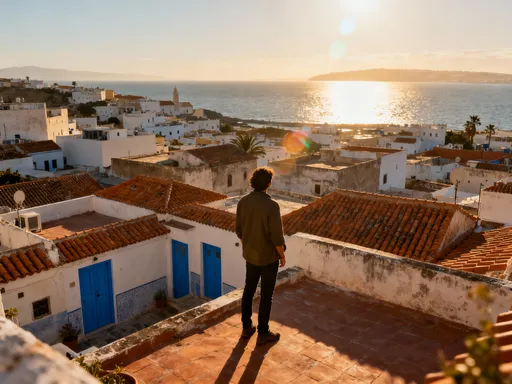
The city’s topography enhances this visual drama. Elevated neighborhoods like Marshan and Montaña rise above the port and old medina, offering layered views of red-tiled rooftops, whitewashed walls, and the distant silhouette of Spain just 14 kilometers across the Strait of Gibraltar. On clear days, the peaks of the Andalusian coast are visible, a reminder of how closely North Africa and Europe are intertwined. This proximity does more than offer a striking panorama—it shapes the very rhythm of life in Tangier, where sea breezes temper the heat and sunlight refracts in unexpected ways across stone and water.
But Tangier’s visual richness isn’t solely a product of nature. Its cultural crossroads status—where African, Arab, Berber, and European influences blend—adds narrative depth to every scene. A single street corner might reveal a French colonial balcony draped with jasmine, a hand-painted Arabic sign above a spice shop, and the call to prayer echoing from a nearby minaret. These details transform ordinary views into living tableaus, where architecture, sound, and movement converge. For the observant traveler, this means that even a quiet moment on a neighborhood bench can feel like witnessing history in motion.
Because of this unique convergence, Tangier rewards slow, intentional viewing. Unlike cities built on flat plains or dense urban grids, Tangier unfolds in gradients—of elevation, of light, of culture. This makes it a paradise for those who appreciate not just what they see, but how and why they see it. Whether standing at the edge of a cliff or peering down from a rooftop café, the experience is never passive. It invites curiosity, reflection, and a deeper awareness of place.
Sunrise Like Nowhere Else: Where to Be When the Light Breaks
There is a stillness in Tangier at dawn that few visitors expect. While the city pulses with energy by midday, the early hours belong to fishermen, stray cats, and the occasional walker who knows the value of solitude. This is when the light begins its quiet transformation, painting the sky in soft pinks and golds before spilling across the water. For those willing to rise early, sunrise in Tangier is not just beautiful—it is revelatory.
One of the most breathtaking vantage points is Cap Spartel, a lighthouse perched on a rugged promontory where the Atlantic and Mediterranean officially meet. Arriving just before 6:30 a.m. in spring or early autumn ensures you’ll catch the full progression of light. As the sun crests the horizon, its rays glide across the limestone cliffs, illuminating their texture and casting long shadows over the cypress trees below. The sea, often calm at this hour, mirrors the sky like polished glass. It’s a moment of perfect symmetry, where nature feels both vast and intimate.
Another excellent location is the eastern edge of the Marshan district, particularly along the quieter residential streets that slope toward the water. Here, there are no crowds, no vendors, just the sound of waves and the occasional call from a passing bird. Benches along the roadside offer comfortable seating, and the unobstructed view eastward means you can watch the sky ignite without interference. This area is especially favored by locals who come to meditate or sip tea in silence, making it an ideal spot for travelers seeking authenticity over spectacle.
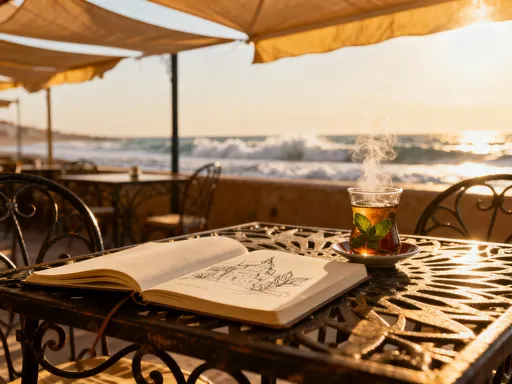
To make the most of these experiences, timing and preparation matter. Wear layers, as mornings can be cool even in warmer months. Bring a lightweight blanket or shawl, a thermos of mint tea, and a small notebook if you enjoy journaling. Avoid using bright phone lights, which disrupt night vision and disturb the peaceful atmosphere. Most importantly, arrive early—15 to 20 minutes before sunrise—to settle in and let your senses adjust. This is not a performance to be rushed, but a daily miracle to be absorbed.
What sets Tangier’s sunrise apart from other coastal cities in North Africa is not just the scenery, but the emotional resonance it carries. In places like Essaouira or Agadir, dawn may be beautiful, but in Tangier, it feels layered with meaning. Perhaps it’s the awareness of standing at a continental threshold, or the knowledge that this same light has greeted sailors, traders, and dreamers for centuries. Whatever the reason, watching the day begin here feels less like sightseeing and more like participating in something timeless.
The Medina from Above: Rooftop Culture and Hidden Perspectives
The heart of Tangier lies within its medina, a labyrinth of narrow alleys, arched doorways, and centuries-old homes. Most visitors experience it at ground level, navigating its winding paths and bustling markets. But to truly understand the soul of this ancient quarter, one must rise above it. The rooftops of the medina offer a different kind of intimacy—one that reveals the poetry of everyday life.
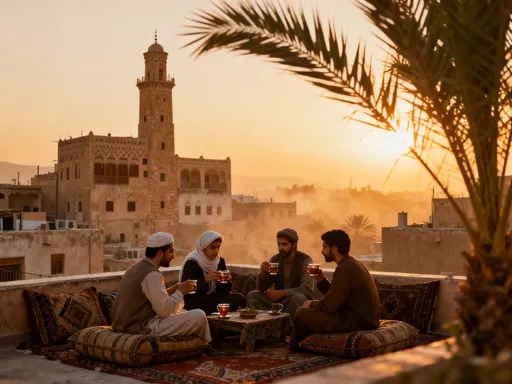
Unlike the crowded terraces of Marrakech or Fez, Tangier’s upper levels remain largely undiscovered by mass tourism. Many local families maintain rooftop spaces where they dry herbs, hang laundry, or gather in the evenings to escape the heat. Some have turned these areas into small, informal cafés, offering mint tea and simple snacks to respectful guests. These are not commercialized attractions, but extensions of home life, where hospitality is genuine and interactions feel personal.
From this elevated vantage, the medina transforms into a textured mosaic. Rows of terracotta tiles ripple like waves, interrupted by the occasional splash of cobalt blue from a painted door or window frame. Clotheslines sway gently in the breeze, their colorful garments fluttering like flags. Potted plants line the edges, their greenery softening the stone. In the distance, minarets rise like sentinels, while seagulls circle above, calling to one another. It’s a living canvas, constantly shifting with the wind, light, and movement of people below.
Gaining access to these spaces requires patience and respect. Knock gently before ascending, speak politely in Arabic or French, and always ask permission before taking photographs. A small tip or the purchase of tea is often appreciated but never demanded. The goal is not to intrude, but to be welcomed. When done right, these moments become some of the most memorable of a trip—quiet conversations with elders, shared laughter with children, or simply the pleasure of sitting in silence while the city stirs to life.
These rooftop experiences also challenge the way many travelers approach sightseeing. Instead of chasing iconic landmarks, they invite presence—being fully in a place, observing without agenda. There is no guidebook rating for the view from a grandmother’s terrace, no Instagram filter that can capture the warmth of shared mint tea at sunrise. Yet these are the moments that linger, that shape how we remember a destination long after we’ve left.
Cliffside Walks: The Corniche and Beyond
Stretching along the northern coast of Tangier, the Corniche offers one of the most accessible and rewarding walking routes in the city. This seaside promenade begins near the port and winds its way westward, clinging to the edge of limestone cliffs that drop sharply into the sea. While parts of it are well-known, the full stretch—especially beyond the main tourist zones—remains refreshingly uncrowded and authentic.
The path varies in width and surface, from paved sidewalks to rough stone steps, but it is generally walkable for people of all ages and fitness levels. Handrails are present in steeper sections, and benches appear at regular intervals, inviting pauses to take in the view. What makes this walk special is not just the scenery, but the way locals use the space. Fishermen cast their lines from rocky outcrops, couples stroll hand in hand at sunset, and children fly kites on breezy afternoons. It’s a living social corridor, where the rhythms of daily life unfold in full view.
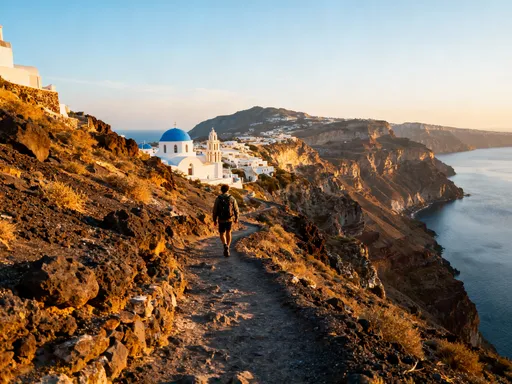
Among the highlights is the stretch leading toward Hercules Cave, a natural sea grotto carved by waves over millennia. Long before it became a minor tourist stop, this cave was a shelter for travelers and a site of local legend. The cliffs around it offer some of the most dramatic overlooks in Tangier, with panoramic views of the Atlantic stretching to the horizon. On clear days, the contrast between the deep blue water and the golden rock face is striking, especially when sunlight hits at a low angle in the late afternoon.
For safety, it’s best to walk the Corniche during daylight hours, particularly in the morning or early evening when temperatures are milder. The midday sun can be intense, especially in summer, so wearing a hat, applying sunscreen, and carrying water is essential. While the path is generally secure, some sections near the cliff edges lack barriers, so supervision of young children is advised. Dogs are common on the walk, usually leashed or under voice control, adding to the neighborhood feel.
What makes the Corniche more than just a scenic trail is its role as a connector—not just of places, but of people and perspectives. As you walk, you’re never far from the water, yet you’re also immersed in the fabric of the city. The sound of waves blends with distant music from a radio, the smell of grilling fish mingles with sea salt. It’s a multisensory experience that reminds travelers that beauty isn’t always found in isolation, but in the harmony of nature and community.
Cultural Viewing: Watching Life Unfold in Public Squares
In Tangier, some of the most powerful viewing experiences happen not from heights or horizons, but at street level. The city’s public squares—Grand Socco, Petit Socco, and Place du 9 Avril—are living theaters where commerce, conversation, and culture intersect. To sit with a glass of mint tea at a simple café is to claim a front-row seat to the unfolding drama of daily life.
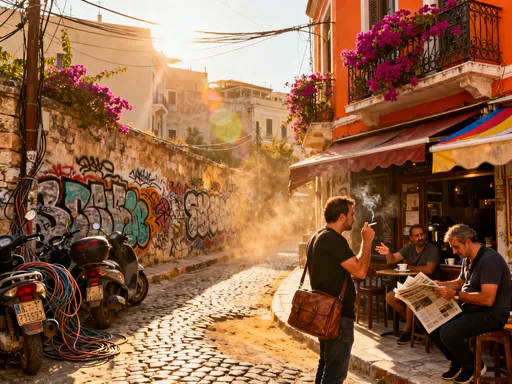
Grand Socco, once a royal garden and now a bustling roundabout, serves as a gateway between the modern city and the old medina. From a shaded table, you can watch vendors arrange pyramids of oranges, men play chess on foldable boards, and motorbikes weave through traffic with practiced ease. The pace is energetic but not frantic, governed by an unspoken rhythm that locals navigate effortlessly. Overhead, laundry hangs between buildings, and potted plants bloom on balconies, softening the urban edges.
Petit Socco, tucked deeper within the medina, offers a more intimate scene. Surrounded by traditional tea houses and spice shops, this small square pulses with a different energy—one of whispered deals, lingering glances, and the constant clink of teacups. It was once a hub for spies and storytellers, and while those days are gone, the air still carries a sense of mystery. Sitting here, you might overhear a poet reciting verses, a merchant haggling in rapid Arabic, or a grandmother scolding her grandchild in a tone both sharp and loving.
Place du 9 Avril, named in honor of a historical event, is quieter but no less compelling. With its wide-open space and surrounding arcades, it invites lingering. Children chase pigeons, elders read newspapers, and tourists pause to orient themselves. The architecture here reflects Tangier’s colonial past, with arched windows and wrought-iron details that speak of French influence. Yet the life within it is distinctly Moroccan—warm, unhurried, and deeply social.
What makes people-watching in these squares so enriching is the permission it gives to slow down. In a world that often values speed and efficiency, these spaces remind us that observation is its own form of engagement. There is no need to buy, to move, to perform. Simply being present—sipping tea, listening, watching—is enough. And in that stillness, a deeper understanding of the city begins to form.
Night Views: When the City Lights Reflect Off the Water
As dusk settles over Tangier, the city undergoes a quiet transformation. The noise of the day fades, replaced by a gentle hush broken only by the lapping of waves and the occasional call from a distant muezzin. Unlike larger port cities that blaze with neon and traffic, Tangier at night feels contained, almost tender. Its lights are soft—amber streetlamps, glowing café windows, the flicker of candles on restaurant tables—and they reflect beautifully on the water.
One of the best spots to experience this is along the breakwater near the ferry terminal. As cargo ships and passenger ferries glide in and out of the harbor, their navigation lights blend with the stars above. Sitting on the stone edge, legs dangling over the water, you can watch the ripples catch the glow, creating a shimmering pathway that seems to lead across the sea to Spain. The air is cool, the silence profound, and the sense of connection to the wider world palpable.
Another peaceful option is the quieter sections of the Corniche after dark. Far from the main thoroughfares, the path is dimly lit, allowing the night sky to emerge in full clarity. On moonless evenings, the Milky Way becomes visible, its arc mirrored faintly in the calm sea. Benches along this stretch are often empty, offering solitude for reflection or quiet conversation. Couples sit close, wrapped in scarves, while solitary figures gaze outward, lost in thought.
What makes Tangier’s night views so special is the absence of light pollution. Unlike cities that flood their skylines with artificial brightness, Tangier maintains a gentle glow, preserving the natural contrast between land and sky. This creates an atmosphere of calm that is increasingly rare in the modern world. It invites contemplation, not distraction. There are no loud clubs or flashing signs to pull your attention—just the rhythm of the waves and the slow pulse of a city at rest.
For visitors, this nighttime serenity offers a chance to process the day’s experiences. The images collected—sunrise over Cap Spartel, rooftop laundry in the medina, children playing in the squares—settle into memory against the backdrop of a quiet sea. In this stillness, the true depth of travel reveals itself: not in the number of places seen, but in the moments of quiet awareness that stay with you long after you’ve returned home.
How to Plan Your Visual Journey: Timing, Seasons, and Local Etiquette
To fully appreciate Tangier’s visual richness, thoughtful planning is essential. While the city can be visited year-round, the best conditions for clear visibility and comfortable exploration occur in spring (March to May) and early autumn (September to October). During these months, temperatures are mild, rainfall is minimal, and the air tends to be crisp, enhancing long-distance views across the Strait. Summer brings heat and humidity, particularly in July and August, while winter can be wet and windy, occasionally limiting outdoor visibility.
Timing of day is equally important. Sunrise and sunset offer the most dramatic lighting, especially for photography, but mid-morning and late afternoon provide ideal conditions for walking and cultural observation. The Corniche is best enjoyed in the cooler hours, while medina rooftops are most inviting in the late afternoon when the sun begins to soften. Night viewing is optimal on clear, moonless evenings when starlight and city glimmers create the most striking reflections on the water.
Dress plays a subtle but significant role in the viewing experience. While Tangier is relatively cosmopolitan, modest clothing is appreciated, especially when entering residential areas or sitting in local cafés. Women may choose to wear lightweight scarves, and both men and women should avoid overly revealing attire. Comfortable walking shoes are a must, given the city’s uneven terrain and frequent staircases. A small backpack with water, a light jacket, and a camera or notebook completes the essentials.
Equally important is the mindset with which one approaches viewing. True observation requires patience, presence, and a willingness to simply be. It means resisting the urge to photograph every moment and instead allowing some scenes to exist only in memory. It means listening as much as looking, and understanding that the most powerful views are often those that unfold slowly—through repeated visits, quiet waiting, and respectful engagement.
In the end, Tangier teaches a deeper kind of awareness. Its landscapes are stunning, yes, but its true gift is the way it invites travelers to see more thoughtfully, to notice not just the grand vistas, but the small, fleeting details that make a place alive. To stand on a cliff at dawn, to sip tea in a crowded square, to watch the stars meet the sea—these are not just sights, but moments of connection. And in a world that often moves too fast, that kind of seeing is nothing short of transformative.